
Cleaning, inspection, repair and airflow balancing. Most Phoenix homes lose more cooling in the ducts than in the air conditioner.
Serving Phoenix, AZ
# ROC 102297
Rated by BBB
Ductwork is where most Phoenix homes lose the cooling they paid for. Not the air conditioner. The ducts.
The reason is where the ducts run. In most Valley homes they run through an attic that reaches [150] degrees in summer. Every leaky joint up there is conditioned air escaping into a space nobody lives in, and every gap on the return side pulls that superheated attic air into the system. A house can have a brand new high-efficiency air conditioner and still cool poorly and cost too much to run, entirely because of what is happening above the ceiling.
CMI-AIR cleans, inspects, seals, repairs and balances residential duct systems across Phoenix and the Valley. We are a licensed HVAC contractor rather than a cleaning company, which matters when the inspection turns up a problem that needs fixing rather than vacuuming.
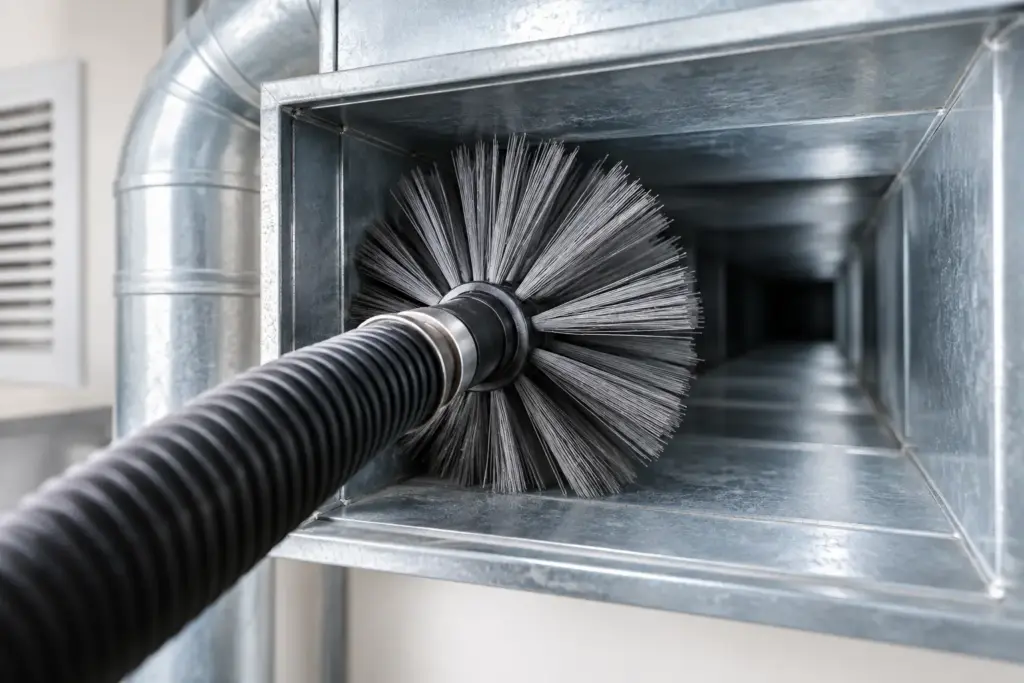
If the ducts are dirty, filtration alone will not solve it. Duct cleaning is handled through our ductwork services.
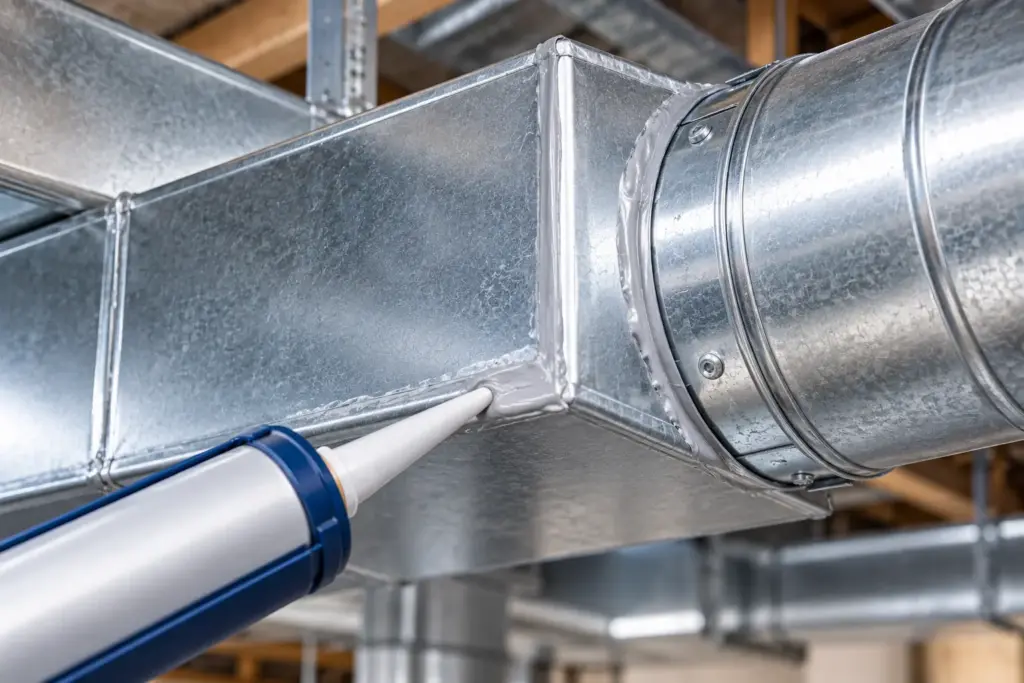
Sealing leaks at joints and connections, repairing damaged or disconnected runs, and re-insulating attic ducts. This is the work that recovers cooling you are currently losing into the attic.
Any two of these together is a reasonable reason to have the system inspected.
What is not a reliable sign: a dusty filter. A filter is supposed to catch dust. Its being dirty means it is working.
Almost always a duct problem rather than an air conditioner problem. The four usual causes:
A disconnected or collapsed run. Flex duct comes loose at a connection or gets crushed in an attic, and the air going to that room is dumping into the attic instead. Common and completely fixable.
Undersized duct for the distance. Rooms at the end of a long run get less air than rooms near the air handler if the duct was not sized for the run length.
No return in that part of the house. Air has to get back to the system. A closed bedroom door with no return path pressurizes the room and cuts supply airflow into it.
Never balanced. Duct systems have dampers for this and many were never adjusted after installation.
The reason this matters: the common response is to replace the air conditioner with a bigger one, and it does not work. A bigger system pushes more air into the same broken distribution, cools the rest of the house faster, shuts off sooner, and leaves that room exactly as it was. Fix the distribution first.
With an inspection, if you are not sure. It tells you whether you are looking at a cleaning job, a sealing job, a repair, or an airflow problem, and those are four different pieces of work with four different price tags.
If you already know what you want, go straight to it. The service pages above each cover what is involved and what it costs.
One thing worth knowing about sequence: if the ducts are both dirty and leaky, seal first and clean second. Cleaning a leaky system means the leaks pull dust straight back in.
If you do not know which of these jobs you need, this is where to start. Cleaning, sealing, repairing and rebalancing are four different pieces of work at four different prices, and from inside the house they produce nearly identical symptoms.
A written report with the readings, the problems in priority order, and what each one would take to fix, in plain language.
The priority order is the useful part. Most duct systems have several things wrong with them and they are not equally worth fixing. A disconnected run feeding the bedroom that never cools is worth doing this week. Slightly undersized returns on a system that is otherwise coping is worth knowing about and possibly never acting on. We will tell you which is which, including the items we would leave alone. There is no obligation to have us do any of the work.
Getting the right amount of air to every room is a separate job from sealing the ducts, and it is the fix for a house where one room or one floor has never been comfortable.
The important thing to know first: a bigger air conditioner will not solve it. A bigger system pushes more air into the same broken distribution. It cools the rooms that already cooled fine even faster, satisfies the thermostat sooner, shuts off earlier, and leaves the problem room exactly as it was. People spend a lot of money learning this.
Cooling capacity and air distribution are two different things. Your air conditioner produces cold air. Your duct system decides where it goes. If a bedroom is getting a third of the airflow it needs, doubling the capacity of the equipment does not change the proportion. Oversizing makes it worse in a second way, because a system that short cycles never runs long enough to even the house out, and long steady run times are what let a house reach equilibrium.
Two situations where it gets you most of the way and the rest is structural.
A two-storey house on one thermostat. One thermostat can only read one place. If the upstairs and downstairs have genuinely different loads, and in Phoenix they do, no amount of damper adjustment makes one sensor represent both floors. Zoning with a thermostat per floor and motorised dampers is the real fix.
A room the ductwork was never going to reach. A converted garage, an addition on the far end, a casita. Extending a duct run a long way to a space with a big load rarely produces a comfortable room. A ductless mini-split dedicated to that space usually does, and it often costs less than rebuilding the duct system to serve it.
We will tell you when you are in one of these situations rather than balancing repeatedly and charging you for each attempt.
Bait pricing is common in duct cleaning, and it is worth knowing how it works before you book anyone. A crew quotes a whole-house clean for less than the job could possibly cost, arrives with a shop vacuum, does a few vents, then finds reasons the real work costs several times what was quoted.
Two questions sort the honest quotes from the bait. Exactly how many vents does that price cover? And what equipment do you use? A company running truck-mounted or negative-pressure equipment will answer both without hesitating.
Call (602) 437-0066 or use the form. Have your approximate square footage and vent count handy if you can, and we can give you a closer number over the phone.
Because duct pricing depends on things nobody can see from a phone call: how many supply and return vents the house has, how many separate systems, whether the ducts are reachable, and what condition they are in. A number given over the phone is either padded to cover the unknowns or it changes when the crew arrives. We would rather look first.
Three things at once. Heat rises, so the upper floor starts with a higher load. The ducts feeding upstairs are longer and run through the hottest part of the attic, so they lose more on the way. And a single thermostat downstairs cannot see what is happening upstairs, so the system stops when the downstairs is satisfied. Balancing addresses the second, and zoning addresses the third.
Most likely that duct run has come loose or been crushed, and the air is going into the attic instead of the room. It can also be a closed or stuck damper, or a run so undersized that it delivers very little. All three are found by measuring at the register and then following the run.
No. It is intuitive and it is counterproductive. Closing registers raises static pressure across the whole system, which reduces total airflow, makes the blower work harder, and can drive the evaporator coil cold enough to freeze. It also does not redirect the air where you want it. If you want less air in one room and more in another, that is what dampers are for and it should be measured.
It is the resistance the blower is working against, and it is the single most useful number for judging a duct system. Too high means the ducts, the filter or the coil are choking airflow, and the symptoms of that look exactly like a failing air conditioner. Most residential systems are never measured, which is why so many houses run for years with a fixable airflow problem.
Sealing, in most Phoenix homes. Cleaning removes what is in the ducts and it improves what you breathe. Sealing stops you losing cooled air into a 150-degree attic, and that is where the money is in this climate. If the budget only covers one and lower bills are the goal, seal.
Sheet metal ducts can last the life of the house if the connections are maintained. Flex duct is more like [15] to [25] years before the inner liner degrades and the insulation compresses. Phoenix attic heat shortens that, which is why older Valley homes often have flex duct that needs replacing rather than repairing.
Yes, and in Phoenix it is one of the biggest causes of a bill that seems too high for the house. Duct leakage in an unconditioned attic wastes cooling twice: conditioned air escapes on the supply side, and superheated attic air gets pulled in on the return side. The system then runs longer to make up for both.
Repair is usually the answer for isolated problems: a disconnected run, a few leaky joints, a crushed section. Replacement makes sense when the flex duct liner is deteriorating throughout, when the system was badly designed from the start, or when the duct sizing cannot deliver what a new air conditioner needs. The inspection tells you which.
Yes, always. Duct condition affects what size system you need and whether a new one will actually perform. Installing new equipment onto a duct system that leaks or is undersized means paying for capacity you will not receive. We check the ducts as part of any replacement estimate.

CMI-AIR is the residential division of Consolidated Mechanical, a local, family-owned commercial air conditioning company with more than 30 years of experience.
Copyright © 2026 CMI-AIR Inc. All Rights Reserved. Designed by Verge Technologies | Marketing by Jives Media